
The Case for the Resistance
It’s always "complicated" when you want to take something from somebody.

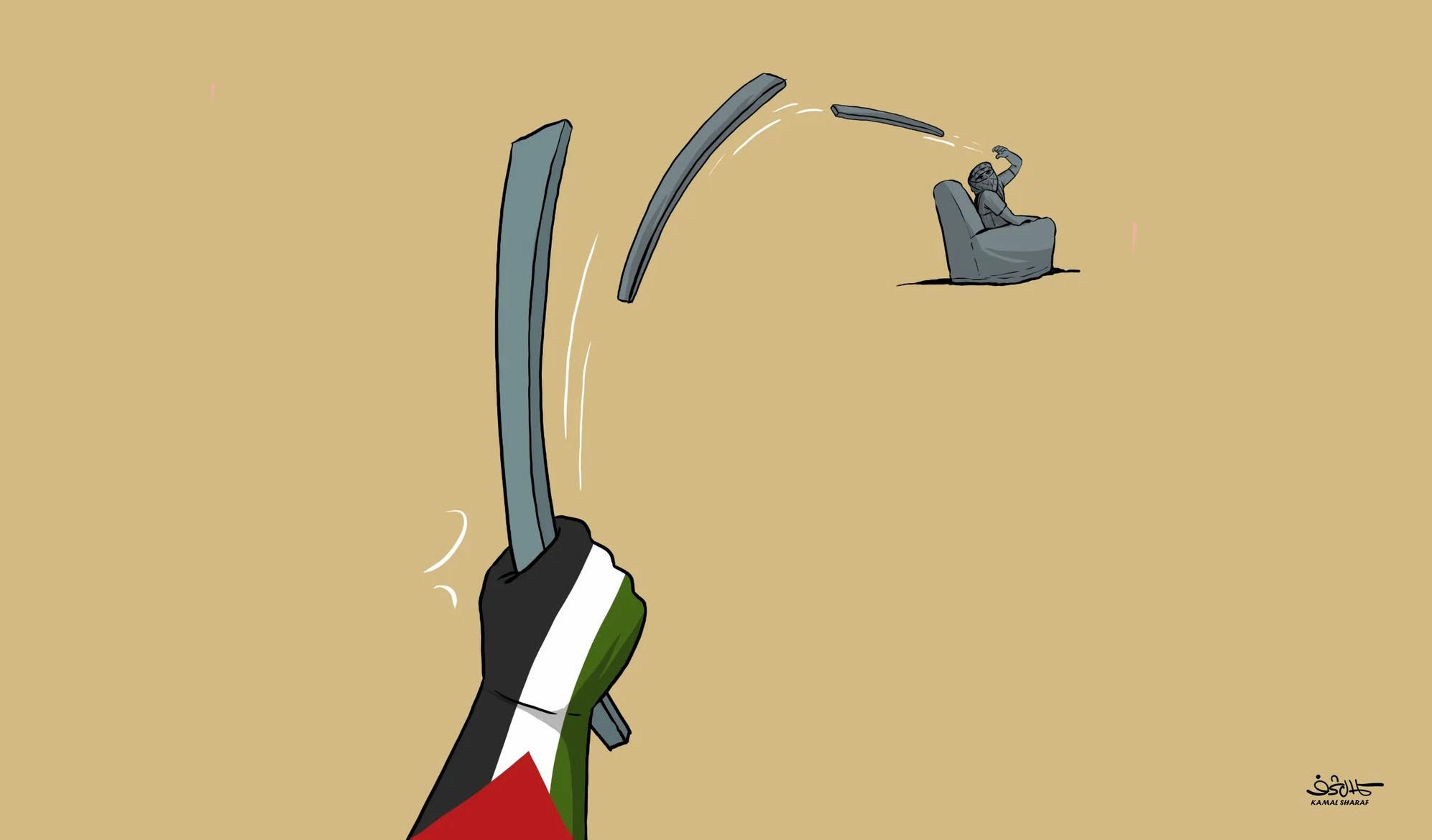
We are nearly a week into a ceasefire that doesn’t truly feel like one. Palestinian people continue to die at the hands of their oppressors, albeit in smaller numbers. Why does this ceasefire seem like nothing more than the second phase of this genocide?
For the past sixteen months, I have written extensively about Gaza, delving into every angle to grasp how such atrocities can be inflicted on these people in this day and age. I’ve wrestled with how something so violent and unjust—witnessed in real-time by millions on their phones—can persist, as if the act of writing could somehow summon a solution to a catastrophe we are powerless to stop.
The angle I haven’t yet addressed is the resistance. I began drafting this article in October of last year and have never spent this much time on any piece. This is my War and Peace, my Crime and Punishment—the level of time, energy, and mental effort I have invested in this work. It also refuses to be finished.
I needed the right moment to lay out the case for the resistance. This piece began to take shape following the death of Yahya Sinwar, but I felt it needed a sense of completion—something to close the circle, like the ceasefire that finally happened this Sunday.
I’m far from naive; a ceasefire offers a much-needed reprieve from the unimaginable suffering of the Palestinian people, but it’s difficult to be confident that it marks the end of their suffering. As Alon Mizrahi aptly observed—“This could become another Oslo Accord moment; a great trap - a mass grave - presented as a historic breakthrough.” Only time will tell.
But this moment does feel like the pivot I had been waiting for. Whatever happens next, we must acknowledge just how much the Palestinian resistance has achieved—both militarily and politically—fighting not only their most brutal, depraved occupier but also the collective Western superpowers.
The core of the Palestinian cause.
Why is the case for the resistance an important conversation we have to have at this moment in time?
Because the greatest atrocities of the past 40 years have been committed under the guise of a terrorist designation, used as linguistic manipulation to justify war crimes. It’s time to move beyond the good West-versus-evil East paradigm of a Marvel superhero movie and awaken to this reality.
People resisting occupation throughout history have been labeled as savages, radicals, and terrorists. If we want to build a better world based on justice, tolerance, and peace, it’s crucial to understand that the designation of terrorism is used as a political label, not a behavioral one.
“If the terrorist label can only be affixed to one set of people but not another set of people, then you’re in an Orwellian zone, you’re down a rabbit hole of linguistic manipulation.” — Norman Solomon
Before a ceasefire took effect this Sunday, a Palestinian man living in the West posted an interesting message on his Instagram, playing exactly into a message I’m trying to convey with this article—“Palestinian resistance is the core of the Palestinian cause. Not victimhood.”
Please read it in its entirety:
“It was not 470 days of genocide, it was 470 days of Palestinians resisting their colonizer. And our colonizer reacted with genocide. So if someone were to ask you what happened over the past year and a half in Gaza, the answer should be—Palestinians resisted, and the oppressor responded with genocide. Genocide was a consequence of Palestinians resisting, not the actual event itself.
This is a very important concept for you to digest and drill into your head. Because the core, the foundation of the Palestinian cause is Palestinian resistance which includes armed resistance. The Palestinian cause and the Palestinian people, we would not exist to this day if were not for Palestinians resisting.
West only likes to discuss Palestinians and the Palestinian cause when we are the victims, never when we are heroes, because maintaining this public image of Palestinians only as victims prevents society, prevents the world from remembering what the actual issue is and what the solution to the issue is — the issue being the colonization of our land, and the solution being resisting the colonization.
This is the poison of the West, conditioning the world to think that the solution to problems is charity, peace, and love, and not justice and fighting for freedom.”
A linguistic manipulation.
Nothing made me more morally nauseated last year than watching the fall of the Assad regime in Syria last December, and the use of a terrorism designation by the Western empire as linguistic manipulation to rehabilitate Al Jolani, a designated terrorist affiliated with ISIS and Al-Qaeda—an organization the American government claims is responsible for 9/11—removing the $10 million bounty on his head, while giving him a CNN Western makeover.
A terrorist for hire, all of a sudden, not a terrorist anymore, as he aligns with the American interests in Syria.
