
Never Again? Srebrenica: Forgotten Genocides Are Repeated
The lessons we did not learn from the Srebrenica genocide.

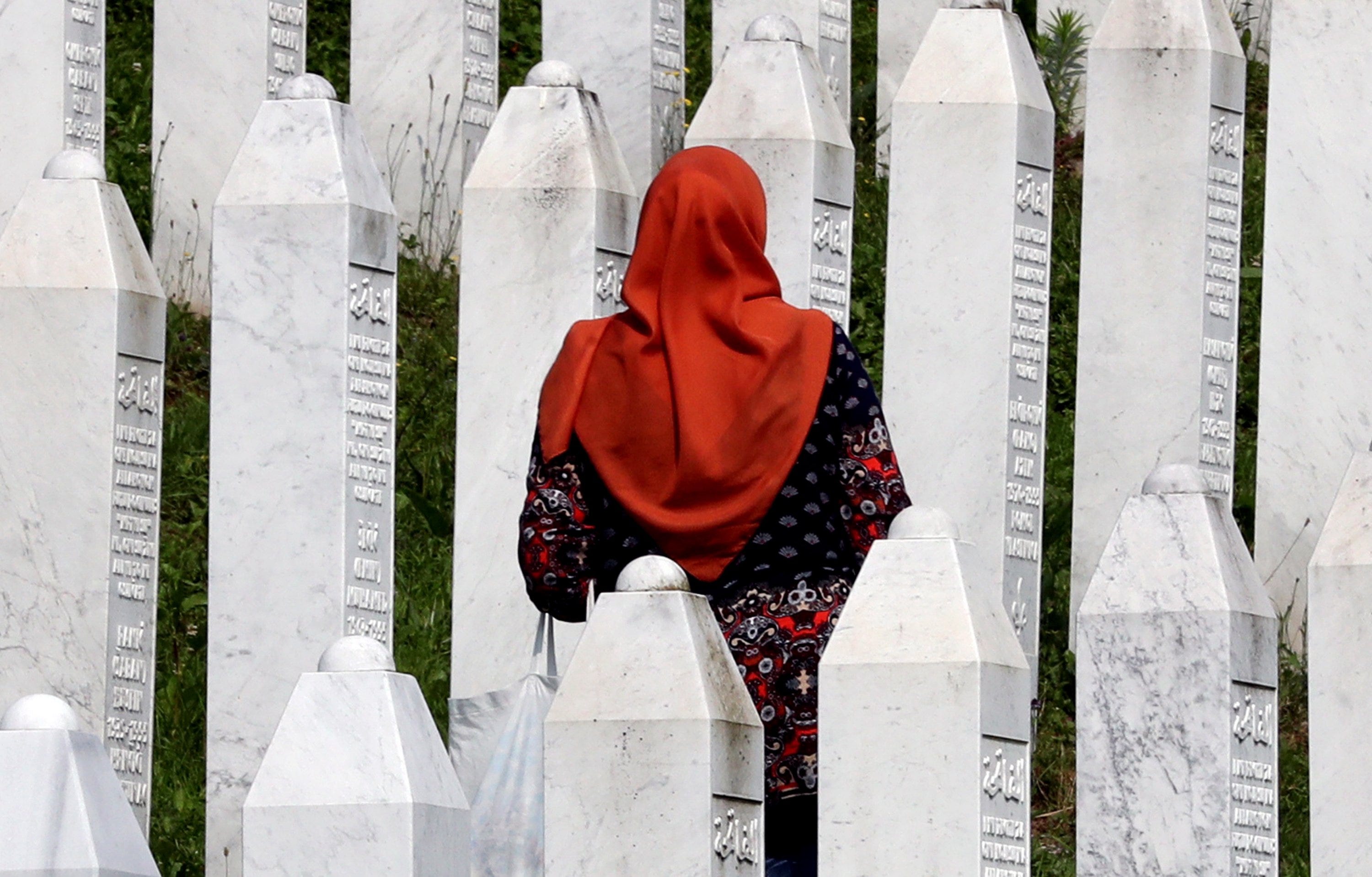
“Never Again” offends me. Every time I hear it, I recoil. It’s a sham, a myth, a lie — the most cynical pretense of all.
Never Again is a platitude. We convinced ourselves that those two words signified a lesson learned, that the memory of past genocides would stop us at even the slightest hint of another, and that the phrase itself carried the power to prevent it. But in reality, Never Again means nothing. It's as hollow as "How are you?"—a ritual we recite without expecting an answer.
Never Again is a lie, a moral leash the West uses to police the rest of the world while continuing to commit the very atrocities it claims to condemn.
Never Again is a comfort mantra. It’s said for show, to make the person saying it feel as though their moral compass is properly calibrated. Never Again is an entire performance, a phrase repeated out of habit, not conviction. It’s no longer a vow, just noise.
July.
Today marks the 31st anniversary of the Srebrenica genocide. Peculiar word to use, anniversary, like we’re celebrating a joyful event or a happy union worth commemorating. It’s dreadful, yet necessary, because it’s Never Again, hey?
July is a hard month for all my Bosnian friends. I see them posting online, sharing remembrance posts that explain what happened for those who don't know. After each one, they draw a parallel with Gaza. A few posts about Srebrenica, followed by posts about Gaza. Then more about Srebrenica, followed by more about Gaza. The little lines on their Instagram Stories are full today.
Their pain is never singular, never just their own. They use it to warn you about today. Even on this dreadful day, they don't make it about themselves but about Never Again. For anyone. Just reading their words, it bleeds through the screen and stings me. It's not normal to be this strong.
Bosnian people are some of the best people I know. In many ways, they remind me of Palestinians. There's a kindness in them that you don't often find elsewhere. A warmth in their eyes, as though the depth of their pain is matched by the softness it leaves behind. They carry a kind of knowledge about the world, as if they're privy to something the rest of us aren't. It's a club reserved only for those who have endured the most devastating forms of injustice.
Hate.
And yet Bosnians, like Palestinians, don't hate. They don't hate the world for letting them down. They don't even hate the perpetrators of their genocide, some of whom were never convicted and now live and walk among them, taunting them with what they got away with. I often wonder how people like the Bosnians can exist in a world that seems far too harsh for such illuminated souls.
They never ask for anything. They're grateful to anyone who acknowledges their pain. They don't rage. They come gently, simply to let you know that July is hard for them—a summer month that, for most of us, is filled with warm nights, sand in our bathing suits, and ice cream stains on our clothes. But for them, it's an unsettling month, a reminder that not all the remains of their 8,372 dead have been found.
They still search for their dead, and every year, on this day, they put those who they found to rest in peace. They will continue looking for the bones of their loved ones or neighbors, until the last remaining soul killed is found.
They don't just live with the pain of their memories or the ongoing reality of still searching for their dead. On this day, they also have to contend with Serbian nationalists denying what happened under nearly every story and every post about commemorating this genocide.
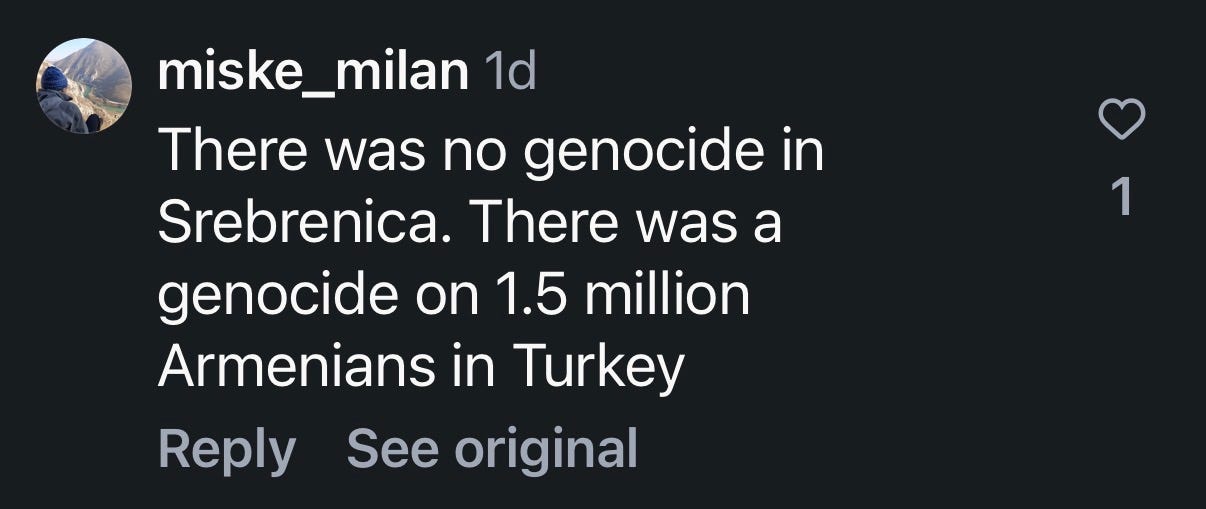
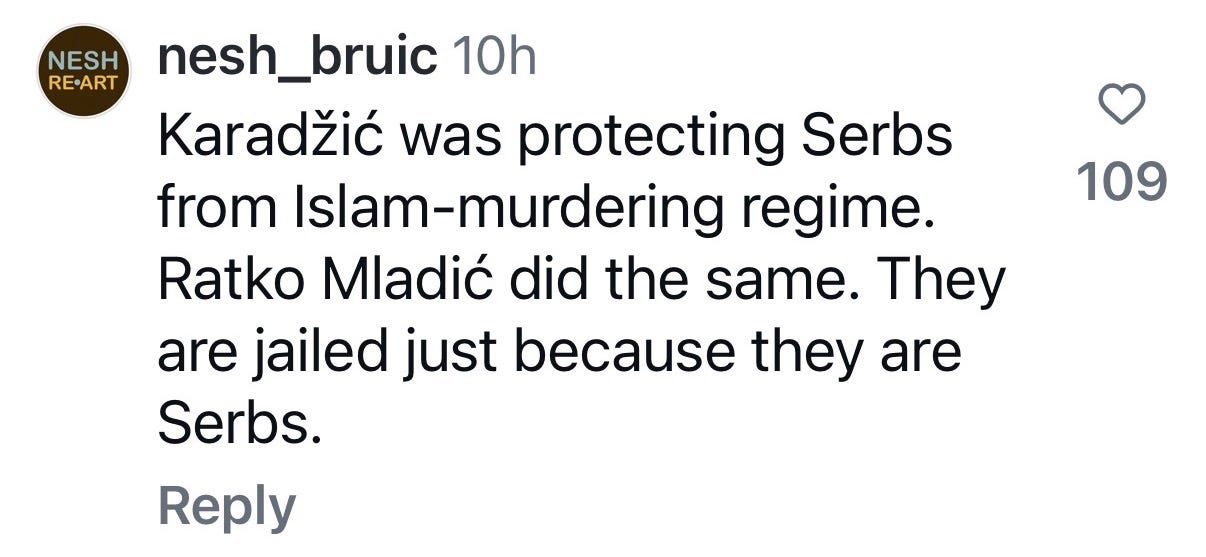
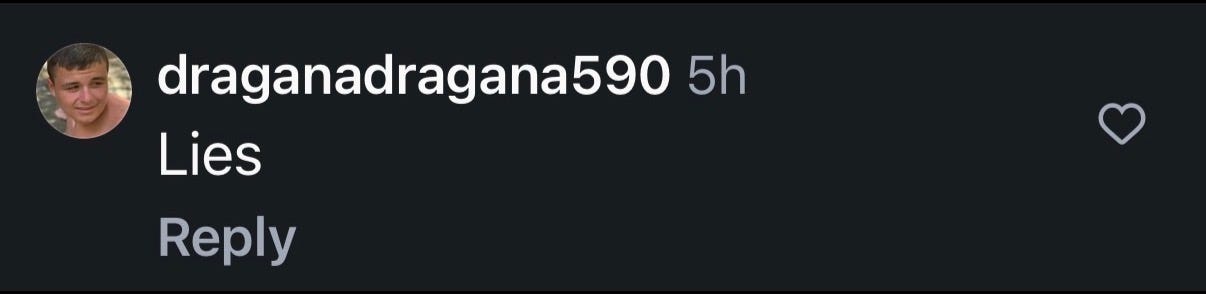
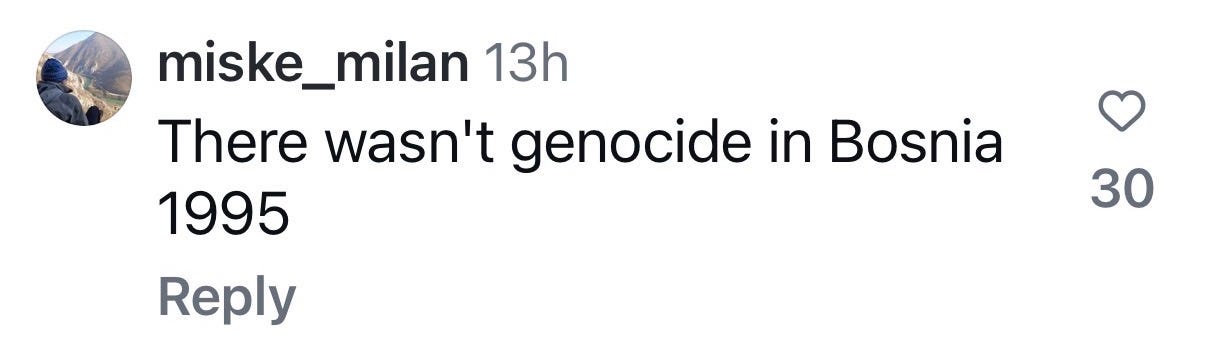
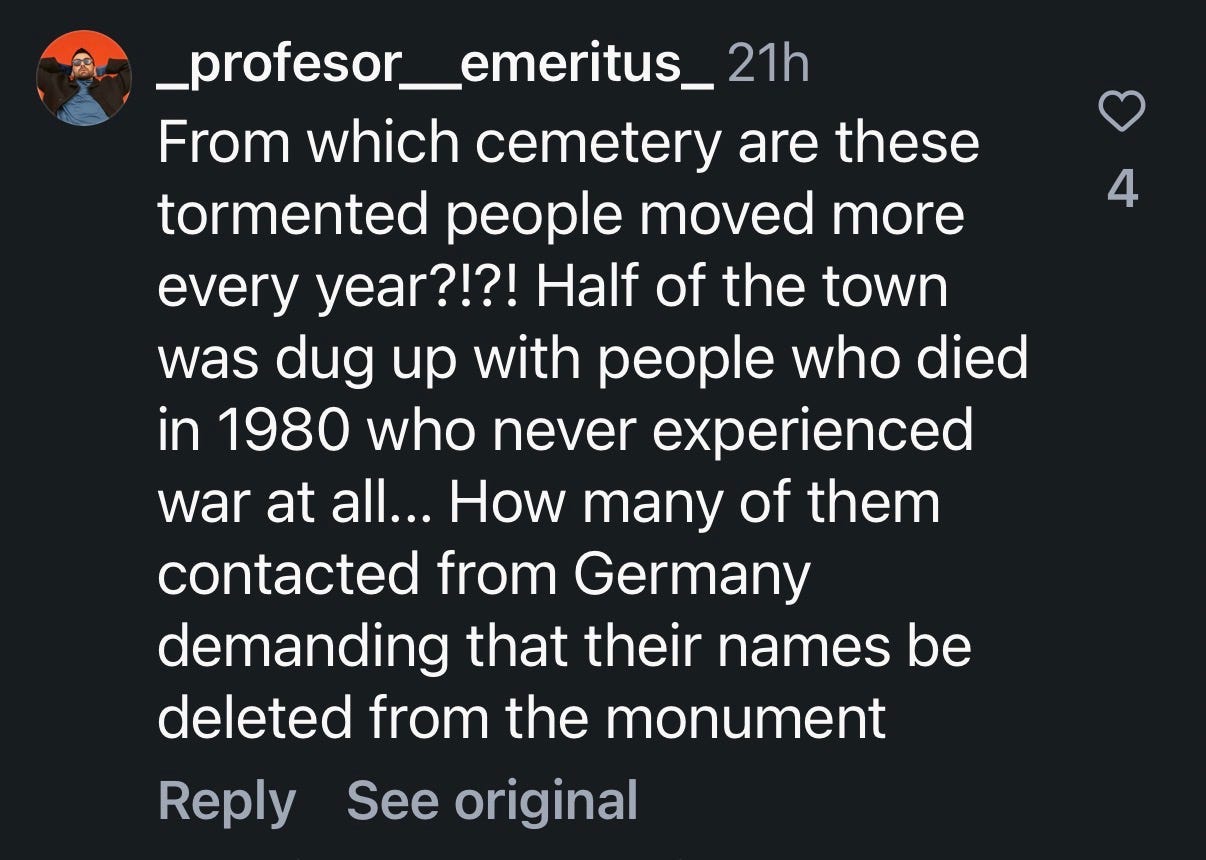
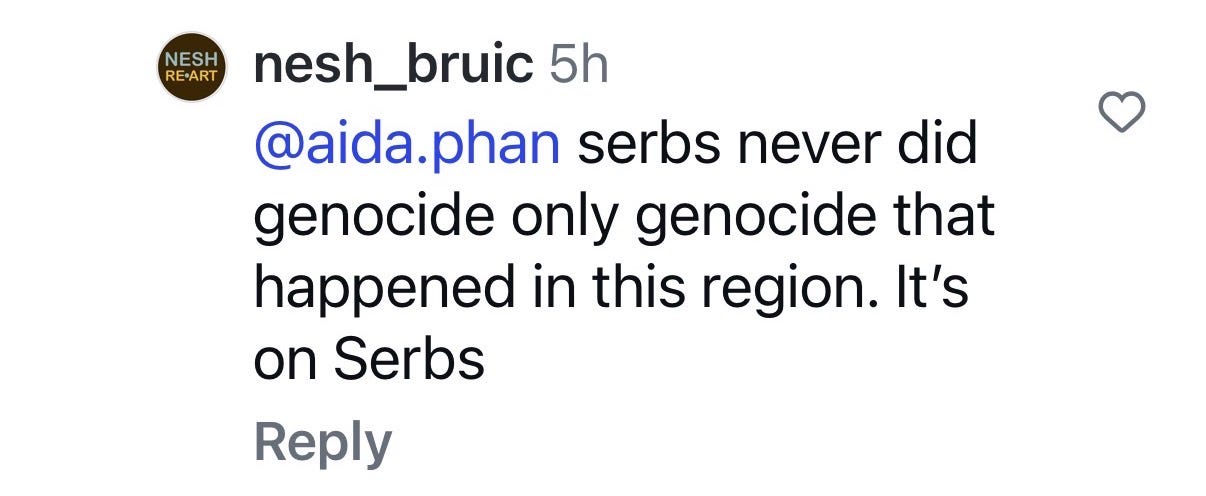
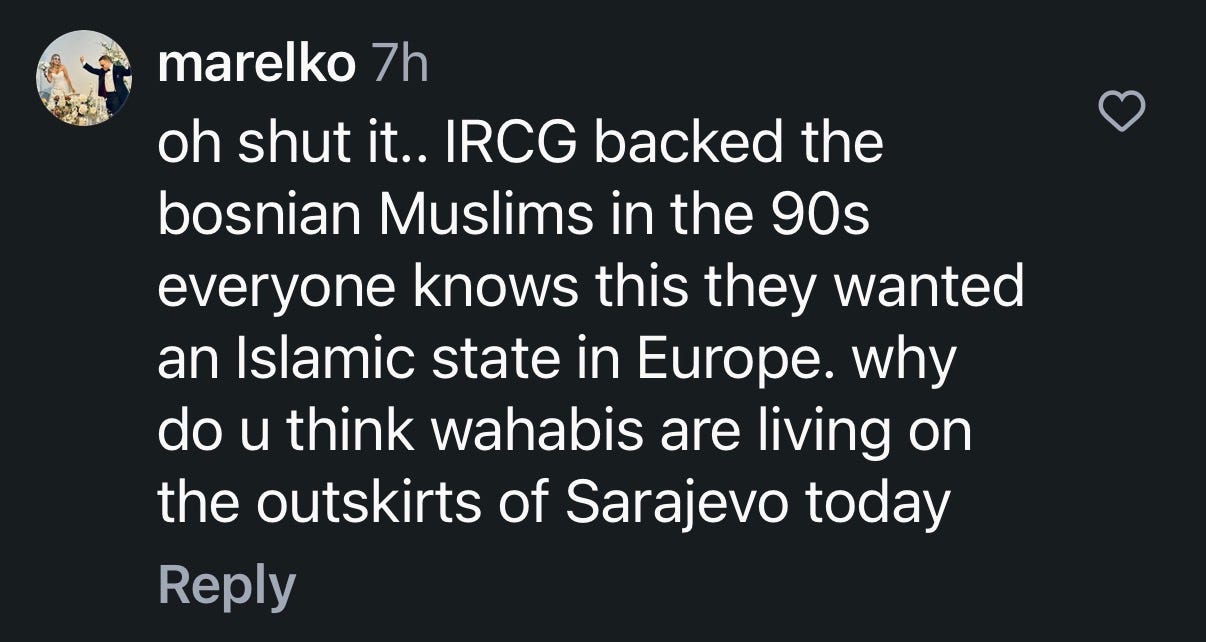
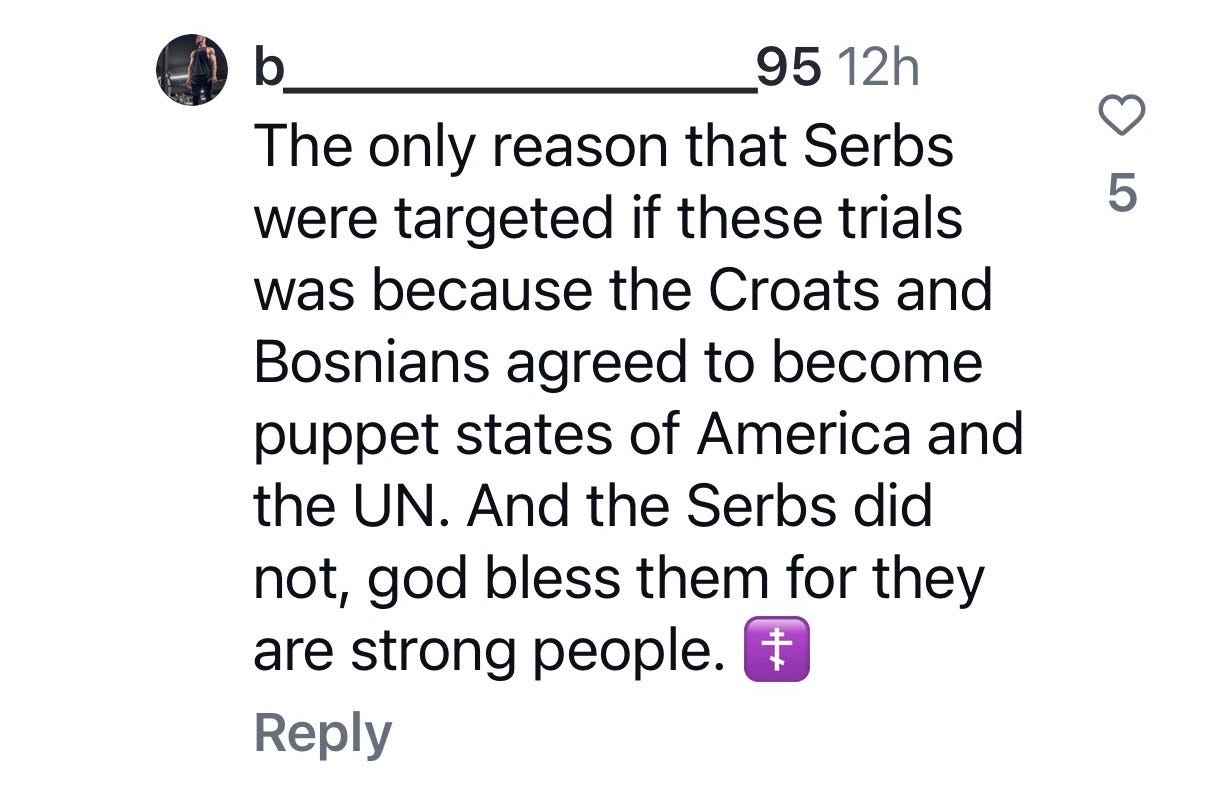
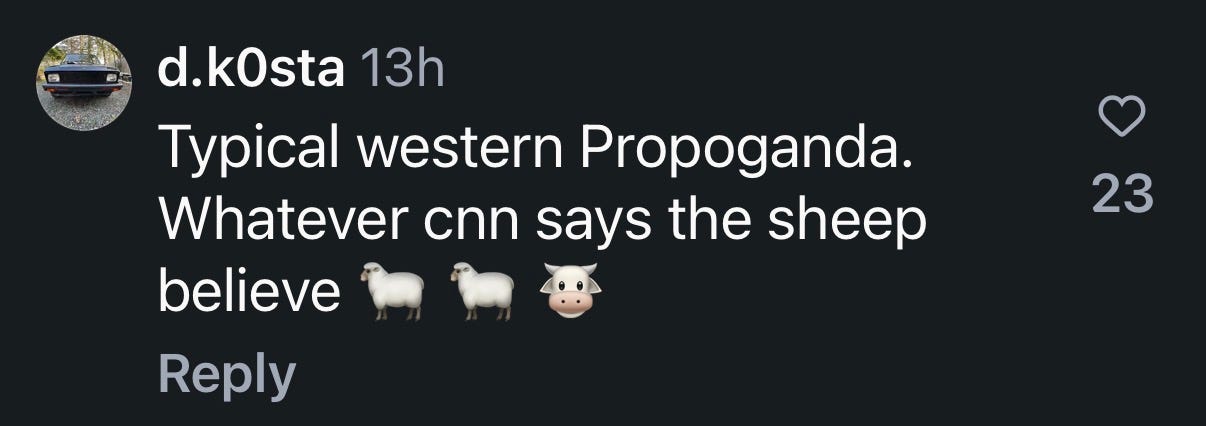
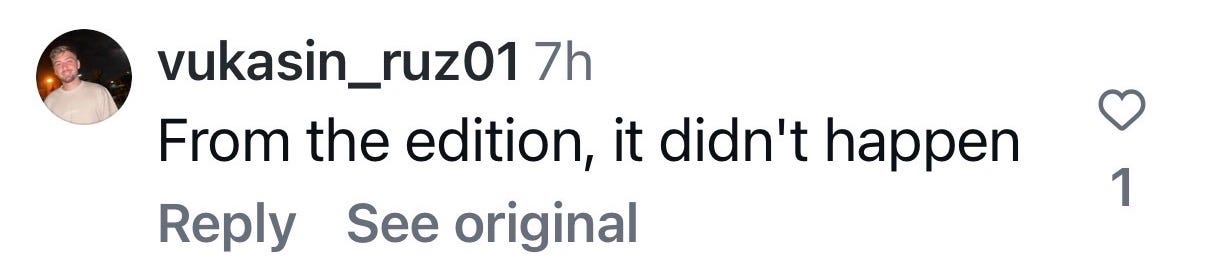
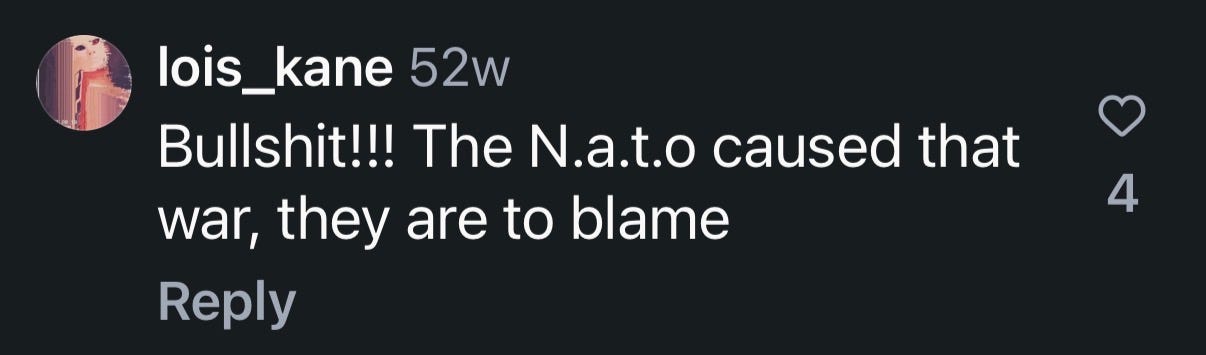
What has been done to combat this denial? In May 2024, United Nations member states voted to declare July 11 as the International Day of Reflection and Commemoration of the 1995 Genocide in Srebrenica, an annual day of remembrance for victims of the 1995 Srebrenica massacre. Yet, denial is stronger than ever before.
Karadžić.
The History Channel also commemorated the Srebrenica genocide today by posting their investigation on Radovan Karadžić, a notorious war criminal serving life in prison at the Hague, accused of personal and command responsibility for war crimes committed against non-Serbs in Bosnia, under whose command Bosnian Serb forces initiated the Siege of Sarajevo and ordered the Srebrenica genocide in 1995.
He directed Bosnian Serb forces to "create an unbearable situation of total insecurity with no hope of further survival of life" in the UN safe area and was accused by the ICTY of ordering that United Nations personnel be taken hostage in May–June 1995.
Serbian nationalists gathered under this post, too, to voice their disapproval of History and history. Never Again is not an exercise these people practice, as Serbian radical president Aleksandar Vučić has been teaching them for 15 years that denial and invented mythology, rather than reckoning with these crimes, is Serbian national identity. You know, this guy:

And these are the Serbian nationalists’ comments on a report about Radovan Karadžić, the butcher of Bosnia, on the anniversary of the Srebrenica genocide:
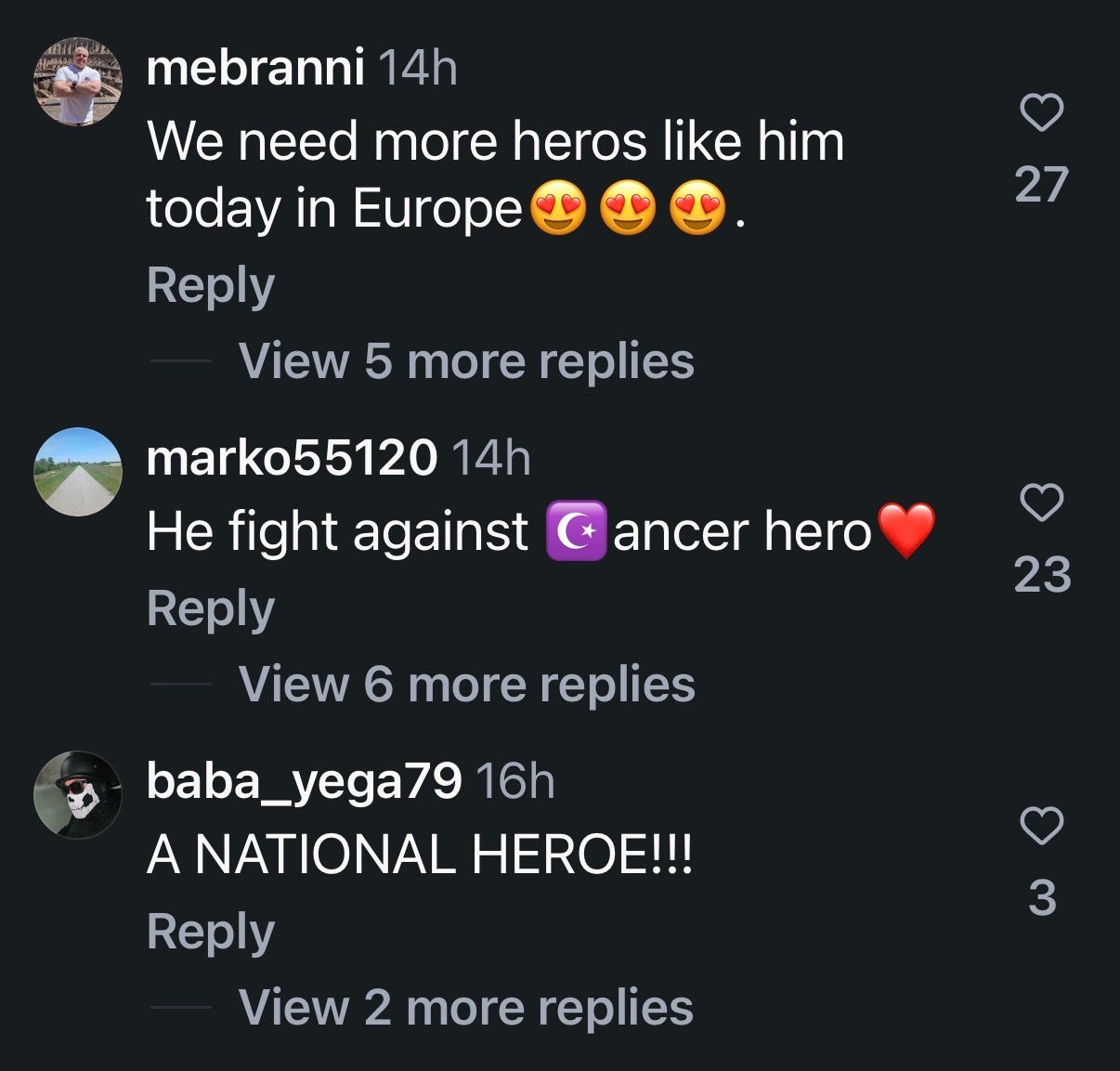
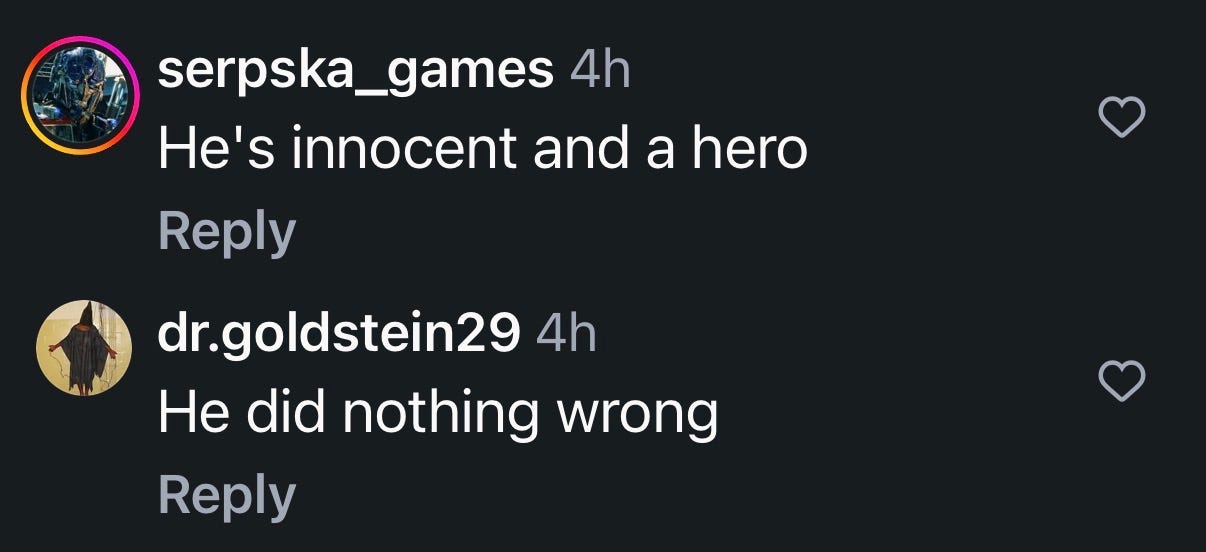

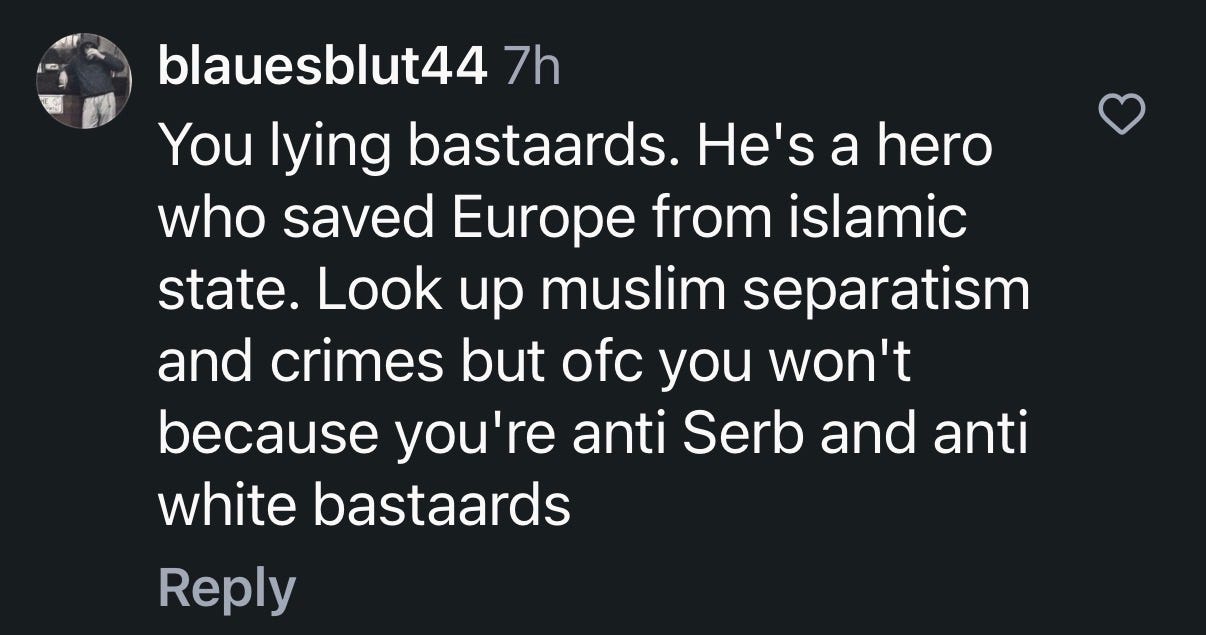
Never again?
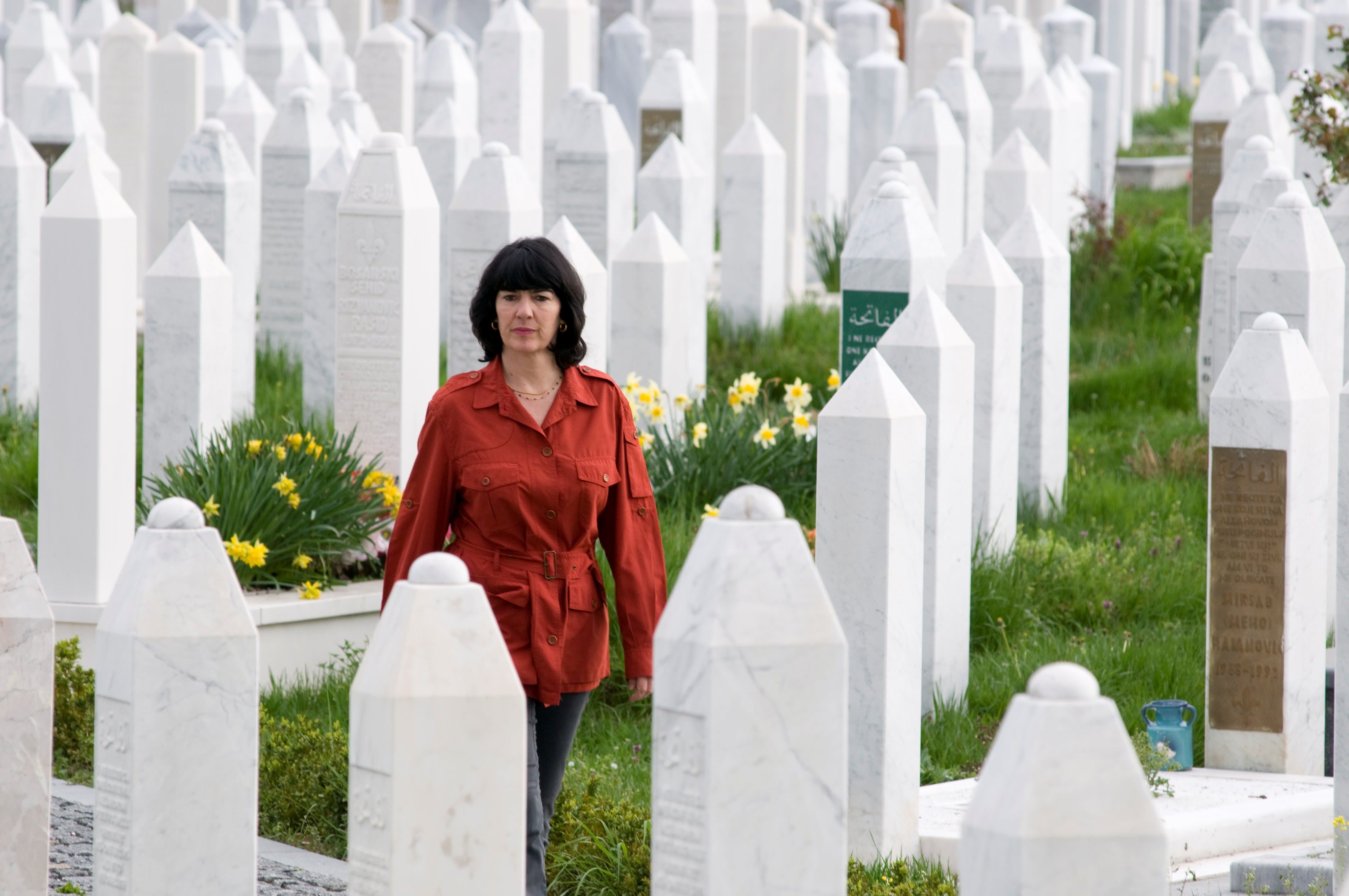
Last year, on the 30th anniversary of the Srebrenica genocide, Christiane Amanpour shared a video commemorating the genocide. I watched it again today. Amanpour is a British-Iranian journalist and arguably CNN’s most prominent figure, renowned for her decades of war coverage around the world.
She played a crucial role in bringing the atrocities of the Bosnian War to the world’s attention through her reporting. Known for her chit-chat with Ratko Mladić, the perpetrator of the Srebrenica Genocide, during his engagement in pleasantries with Srebrenica residents before he ordered their slaughter.
Christiane Amanpour was in Bosnia at the time of the genocide. She witnessed it in person, reported on it, and clearly and precisely named the perpetrators and their leader. Yet today, she minces her words about the same kind of atrocity unfolding in Gaza, only on a much larger scale.
Her coverage of the Gaza Holocaust happening for the past three and a half years, livestreamed on our phones, daily, has been shameful. Her reporting about the Palestinian people lacks the moral clarity she once had, and in doing so, she is aiding the ruling system and the very people who not only allowed Gaza to happen but are actively funding it.
As someone with decades of experience reporting from war zones, she never named the perpetrators in Gaza by their names and called for their accountability.
Never Again?
There is one sentence Christiane Amanpour said last year in her video commemorating the Srebrenica genocide that banged me on the head, having lived through almost 4 years of the unspeakable war crimes unfolding live on our phones:
“Even wars have rules, you can’t kill civilians and non-combatants.”
Knowing what we know now, almost four years in, and seeing Israeli forces bomb Palestinian civilians in the tents almost seven months after a supposed ceasefire was declared, can we still pretend that wars are about anything but killing civilians?
It’s time we grow up, become atrocity-literate, and acknowledge that wars have always been about targeting civilians under the pretense of security or self-defense. At their core, wars are about removing the people from the land you want to take and seizing the resources they live on. The military exists to carry out that economic and territorial mission. It has never been about anyone’s safety.
Civilians are not collateral damage; they are the target. Genocide is not an exception to war; it is a tactic. A deliberate tool of the imperial conquest.
Never again?
We are the conscience. “This is what our ruling class has decided will be normal,” said Aaron Bushnell before setting himself on fire in protest of the genocide in Gaza. It is our responsibility to never accept any genocide or massacre or any killing of a civilian population as normal. Not in the past, not in the present, and prevent it in the future by exposing those who committed it and those who are denying it to this day.
Upholding that conscience is not a momentary act; it’s a lifelong duty.

A recommended read on this subject:
Srebrenica: Most well-known manifestation of hate rooted in history
“Forgotten genocides are repeated.”
