Israel Is Not Defending Itself in Lebanon; It Is Erasing Lebanese Culture, Heritage, and Identity
Western governments prioritize military alliances and strategic objectives over the preservation of history.
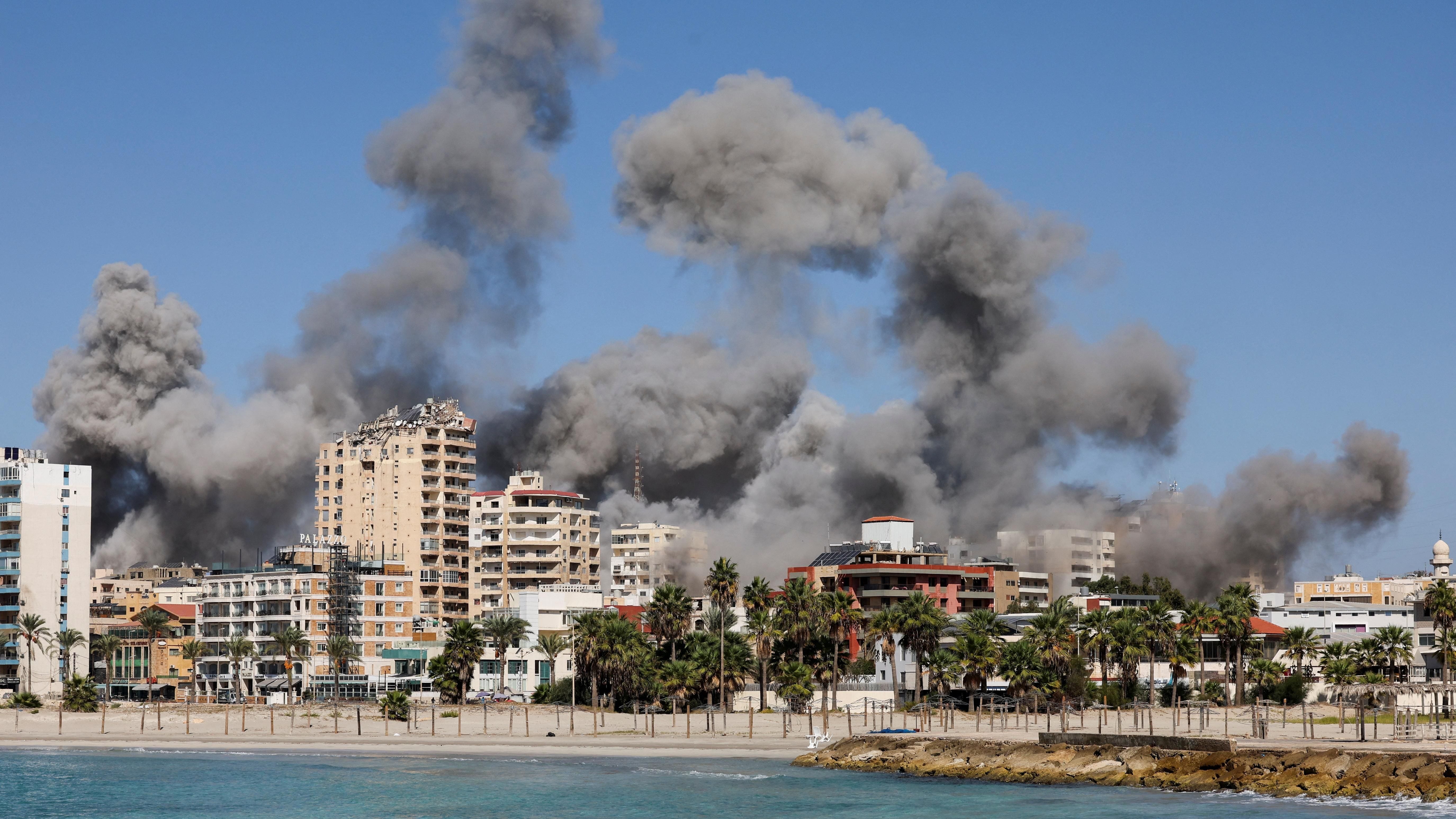
Seeing the images of Israel pounding the ancient city of Tyre in the past week, as well as ordering the evacuation of the entire city on Tuesday, got me reeling. I grew up in the Balkan War of the 90s—bombing historic sites, churches, mosques, harbors, and civilian infrastructures is uncomfortably familiar to me.
The city I grew up in is built around an ancient Roman palace—1,800 years old, called Diocletian’s Palace. If you’ve watched Game of Thrones, you’ve seen the ancient walls of Split. Like historic sites in Tyre, Diocletian’s Palace is a UNESCO World Heritage Site.
Diocletian's Palace is what the entire identity of the citizens of Split is built on. During the Balkan War, the Yugoslav Army and Navy launched a heavy artillery naval attack on the city. The Yugoslav Navy destroyer Split—ironically bearing the city's name—opened fire on Split, hitting the city center and the port, with Diocletian's Palace among its targets.
The Yugoslav Navy specifically targeted civilian infrastructure, the harbor, and historic parts of Split, all protected under UNESCO World Heritage status, causing widespread panic. Luckily, the naval shell landed just a few yards outside the Golden Gate of Diocletian's Palace. Hitting the palace offered no military advantage. It was personal. It was an attempt at erasure.
After the Battle of the Dalmatian Channels resulted in a major Croatian Navy victory that broke the Yugoslav naval blockade of Split, it forced the Yugoslav Army and Navy to retreat south.
Furious over this naval setback, their inability to take Split, and the ass-whooping they received from a Croatian Navy that had been barely pieced together from civilian vessels, captured equipment, and defecting personnel, Yugoslav forces turned their wrath on the undefended city of Dubrovnik, another UNESCO World Heritage Site. Another Game of Thrones location—yes, that King's Landing.
The blockade and siege of Dubrovnik lasted eight months. The most infamous bombardment, known as the Black Friday Attack, consisted of artillery, naval, and air assaults directed at the UNESCO-protected Old Town.
From. All. Sides. Imaginable.
The city was pounded with such zeal, such fury, making it clear the objective was not military victory or a simplistic land grab, but an attack on culture, heritage, and identity.
More than 11,000 historic buildings were damaged. The Old Town was looted and burned. Monuments, palaces, and churches were engulfed in flames. The entire city of Dubrovnik was left without electricity or water for three months. 194 Croatian military personnel were killed. 88 civilians lost their lives.
The unprovoked, deliberate targeting of a globally celebrated demilitarized zone shocked the world. Dubrovnik had no active military bases, heavy artillery, or soldiers stationed inside the old walls. Its status as an open, undefended cultural sanctuary is why the international community was so deeply shocked by the bombardment.
Attacking such a high-profile cultural landmark without any strategic military objective was an attack on the Croatian people’s morale—a deliberate assault on culture, history, and identity. All while the Yugoslav Army, under Serbian leadership, claimed its actions were defensive.
Every war is built on the same principle: the aggressor claims to be protecting its own security while seeking to expand its territory, blaming the people whose land it covets for resisting and portraying them as a threat to its survival—with the help of a compliant media.
Lebanon

If endless, wholesale slaughter in Gaza wasn’t enough to crush your will for existence, this is what Israel bombed in Lebanon just this past week:
Ancient & Historic Sites
Beaufort Castle (Qalaat al-Chakif), UNESCO Enhanced Protection:
Directly hit by airstrikes and heavy artillery. Massive plumes of smoke engulfed the 12th-century Crusader structure, causing severe structural degradation to the surrounding ridge and defensive masonry.
Tyre Ruins & Hippodrome, UNESCO World Heritage:
Missiles detonated meters from the core UNESCO World Heritage area. The blast completely leveled two adjacent apartment buildings, sending heavy shockwaves through the ancient Roman hippodrome.
Cities, Towns, & Villages
Beirut:
A massive overnight bombardment flattened residential apartment complexes, tore down commercial shopfronts, and pulverized critical civil infrastructure across the southern suburbs and Choueifat.
Tyre, UNESCO World Heritage:
Broad air raids systematically crushed a major commercial sector and residential block within the central city. Direct hits also tore through sections of the nearby Al-Rashdieh camp, leaving families trapped under rubble.
Baalbek:
The ancient city, famed for some of the world’s best-preserved Roman temples, remains under extreme threat. While the core Roman Acropolis has miraculously avoided a direct hit, nearby strikes have leveled several historic, Ottoman-era protection sites just meters from the main UNESCO temples.
Sidon:
Aerial strikes collapsed multi-story apartment buildings and fractured essential water and electricity networks.
Nabatieh:
Targeted air strikes completely hollowed out downtown civic buildings and pulverized neighborhoods surrounding the Ali al-Taher hill.
Southern Villages & Border Regions
Adloun:
A single, unannounced airstrike completely flattened a sheep farm, killing an entire displaced Syrian family consisting of a father, his pregnant wife, and their six children.
Ansar:
Intense air raids struck a localized residential zone, killing three civilians.
Ebba (Ebba-Nabatieh Road):
A targeted drone strike blew apart a transit vehicle, severely wounding two Lebanese army soldiers.
Burj al-Shemali:
Relentless overnight bombardments leveled an entire neighborhood, killing five civilians (including two children and three women) and wounding 40 others.
Yohmor & Zawtar El Gharbiyeh:
Advancing Israeli ground forces deployed heavy armor and bulldozers, systematically demolishing and leveling homes along the Litani River.
Arnoun al-Shqeef:
Artillery barrages tore up agricultural land, fractured regional roads, and damaged civic buildings surrounding the Beaufort ridge.
Kfar Chouba & Kfar Hamam:
Precision drone strikes cratered the asphalt, permanently severing the main arterial road connecting the two towns.
Al-Mansouri & Al-Hanniye:
Coordinated artillery shelling blasted coastal farmland, killing livestock and setting orchards ablaze.
Al-Zrariyeh:
Precision missiles destroyed a vocational school building and adjacent civilian garages.
Toura:
Airstrikes tore through a civilian residential center, causing heavy infrastructure damage and multiple casualties.
Haris, Beit Yahoun, Al Ghandouriya, Jibsheet (Jibchit), Tebnine, Byout al-Siyyad, Majdal Zoun, Hallousiyyeh, Tayr Felsay, Deir Qanoun Ras al-Ain, Chaaitiyeh, Maarakeh, Aaitit, Al-Abbasiyyeh, Al-Nmairiyeh, Al-Sultaniyah, Touline, and Safad al-Batikh:
Warplanes deployed heavy munitions across these southern villages. The bombardments collapsed multi-family homes, blasted cratered gaps into roadways, tore down power lines, and inflicted widespread collateral damage to adjacent property.
Eastern & Beqaa Valley Regions
Labaya (Outskirts):
Heavy warplane munitions struck the city fringes, tearing apart rural infrastructure and creating massive craters.
Sources: Inquirer Global Nation, UNESCO Official Statements, Tyre Ruins & Hippodrome, UNESCO Satellite Monitoring, Tyre, Middle East Institute Analysis, Wikipedia Cultural Heritage Damage Ledger, Associated Press / Rutland Herald, Alarabya English, Middle East Eye Live Updates, Saba News Agency, The Journal World Reports.
Israel is not defending itself in Lebanon. It is carrying out a campaign of cultural erasure aimed at Lebanon's history, heritage, and identity.
International legal fallout
Recent Israeli military strikes heavily endangering several globally recognized, UNESCO-protected ancient heritage sites in Lebanon prompted widespread international condemnation.
Anything else? Or will we constantly live under a permanent condemnation without any action ever being taken?
Let’s talk legal. UNESCO World Heritage sites, alongside the “Provisional Enhanced Protection” status from UNESCO, grant high-level immunity from military attacks under the 1954 Hague Convention.
Lebanese authorities and global archaeological groups have strongly condemned these bombardments. Because Tyre and Beaufort Castle were recently granted enhanced protection statuses, UNESCO warns that failing to respect these boundaries constitutes a serious breach of international law and can be prosecuted as a war crime.
UNESCO warns.
Lebanese authorities condemn.
Are those the same authorities that keep condemning Hezbollah while attending negotiations with their own aggressor in Washington?
You negotiate with Israel, who bombs your historic site, and you condemn Hezbollah for being the only force protecting those sites and its citizens? Who exactly is protecting these people? Non-existent Lebanese Army that stands down while Israel is pummeling its citizens and erasing their entire identity?
Israel’s excuse
How does Israel justify all these war crimes they have committed in the past week? The Times reports:
The precision strike on an apartment building in the Choueifat area, reported to have been targeting a Hezbollah-aligned missile unit commander, came after reported US requests for Israel to avoid hitting the Lebanese capital. The Israeli army claimed responsibility for the attack, saying it had carried out “a precise strike in the Beirut area”.
One of the world’s oldest continuously inhabited cities, Tyre is home to refugees from across southern Lebanon. The Israeli military issued a fresh evacuation order for Tyre early on Thursday, claiming it was “compelled to take forceful action” against Hezbollah.
A similar order has been issued for Nabatieh, just north of Zawtar al-Sharqiyah. On Thursday, the Israeli army said it had struck more than 135 alleged Hezbollah targets in the previous 24 hours in southern Lebanon and the Bekaa Valley, including ten rocket launch sites.
The Lebanese government said children were among the victims of Israeli strikes on Sidon.
On Wednesday, the Israeli military declared all areas south of Lebanon’s Zahrani River, which flows north of Tyre and south of Sidon about 25 miles north of the border, as “combat zones” and told residents to leave. The head of the Israeli army, Eyal Zamir, said: “We are intensifying our operations in order to strike ever more severe blows to the Hezbollah organisation.”
Again, and again, and again, and again.
Note: During the several hours of the Israel parade in New York City, attended by war criminal Bezalel Smotrich, supported by Chuck Schumer and Kathy Hochul, Israel killed 41 people in Lebanon. Last week, Benjamin Netanyahu ordered attacks on Beirut. No Western governments offered their condemnation or took any action against this blatant violation of an international law.
Spillover
Western media keeps describing Israel’s assault on Lebanon, which has claimed the lives of 3,637 people and injured 11,188 people since the beginning of March, as a “spillover.” This word is doing a lot of political work. It appears in every headline about Lebanon: spillover violence, spillover attacks, spillover conflict. It suggests something accidental, unintended—violence that, oops, spilled from one place into another.
Israel has been living by the sword since before they were officially recognized as a state. And the assault on Lebanon was never a spillover from Gaza or a result of Iran supporting the resistance to Israeli occupation and belligerence.
Lebanon was never a spillover or collateral. It was built into the architecture of the Israeli conquest from day one. The framing of "spillover" is a linguistic trick, much like calling people defending their land "terrorists" or labeling them "proxies" of the only country willing to help them.
This verbiage the corporate media is using is deceptively suggesting Israel didn’t mean to strike Lebanon. They were forced. It brainwashes the reader into believing Israel is merely reacting, containing, and preventing escalation. It gaslights us into thinking the violence is a regrettable extension of a war taking place somewhere else.
Please.
Target
Israel’s violence against Lebanon is not a spillover, accidental, or reactive; it is historical. And the history, funny thing, is researchable. Lebanon has always been a target, long before Gaza:
• 1948: Israeli forces expel Palestinians into Lebanon, creating a refugee population the country still hosts.
• 1978: Israel invades southern Lebanon.
• 1982: Israel invades again, this time occupying the capital, Beirut, the only Arab capital under full Israeli military control in modern history.
• 1996: Operation Grapes of Wrath, Qana massacre.
• 2006: 34-day war, over a thousand civilians killed, cluster bombs still littering the south.
• 2010s onward: Near-weekly violations of Lebanese airspace.
• 2023–2024: Systematic attacks across the South stretching deeper each month.
• 2025–2026: Persistent aerial campaign, 10,000 Israeli ceasefire violations during this window, destroyed approximately 10,000 buildings, and killed hundreds of Lebanese civilians.
Hezbollah
Israel’s military doctrine has always included Lebanon. Israeli officials have described Hezbollah as the greatest strategic threat in the region. Entire military budgets, missile defense systems, and war simulations have been built around the “northern front.” Israeli generals do not hide this, and their language is clear: “The northern front is inevitable; we cannot end this war without addressing Lebanon.”
Gaza
The Israeli assault on Gaza post-October 7th only provided the pretext for a war on Lebanon that was pre-planned. When Israel launched its attack on Gaza, Hezbollah responded with limited and measured strikes, not escalation, aimed at relieving pressure on Gaza and deterring a northern invasion. Israel used their control of the media narrative to frame these as unprovoked aggression.
But viewed chronologically, Israel’s attacks on Lebanon intensified even when Hezbollah held back. Israeli leadership saw the Gaza war as a strategic opportunity to test weapons, conduct cross-border assassinations, degrade Hezbollah positions, displace Lebanese civilians, and expand the zone of destruction.
Classic parallel warfare.
Instability as a tool
If Western outlets admit Lebanon is a deliberate front, not collateral, the entire Western narrative about Gaza collapses. Because then, Israel isn’t responding but expanding. It stops being “the defense” but an opportunity.
Western media needs the spillover myth to protect Israel, to gaslight readers that Israel is only reacting, defending, and preventing further instability. In reality, Israel is creating instability as a strategic tool.
Deterrence
Israel frames Hezbollah as the aggressor, but Hezbollah’s role is inseparable from Lebanon’s geopolitical position. Lebanon cannot be separated from the history of Palestinian displacement, regional anti-colonial movements, and Israeli attempts to redraw borders.
Lebanon is part of the war not because Hezbollah intervened, but because Hezbollah exists as the only force capable of deterring Israeli regional domination.
Economic warfare
Do you know why Israel is pounding Lebanon like there’s no tomorrow and hitting its iconic cultural sites?
Historically referred to as the “Paris of the Middle East,” Beirut has a highly educated, multilingual population, a vibrant arts scene, and an emerging ecosystem of startups, digital agencies, and tech incubators. Initiatives like the LEAP project aimed to transition the country into a regional AI and fintech competitor.
Critics of Israel, or let’s just say anyone with a functioning logical mind, argue that by repeatedly bombing commercial districts, infrastructure, and urban areas, the military operations trigger massive “brain drain,” forcing engineers, creatives, and entrepreneurs to flee the country indefinitely.
Continuous instability due to continuous warfare ensures that Lebanon never structurally recovers or competes with regional tech hubs, effectively keeping it economically crippled.
This has nothing to do with Hezbollah. Hezbollah exists only to prevent this from being fully realized.
De-development
Independent analysts often point to what is known as “de-development” or the deliberate creation of a failed state.
A prosperous, technologically advanced Lebanon with a booming economy would naturally develop a stronger, more centralized government and a well-funded national army. By keeping Lebanon in a constant state of economic crisis and physical destruction, it ensures the Lebanese state remains too weak to govern effectively or secure its own borders.
Cultural erasure
Legal scholars, historians, and local authorities increasingly connect these events to explain how targeting heritage goes far beyond physical collateral damage.
Urban planning research groups, such as the Beirut Urban Lab, emphasize that looking at this strictly as “accidental collateral damage” ignores the strategic utility of cultural destruction. In both the Balkans in the 1991 war and Lebanon today, the destruction achieves several functional, destructive objectives:
┌──────────────────────────────────────────────┐
│ TACTICS OF SYSTEMIC CULTURAL ERASURE │
└──────────────────────┬───────────────────────┘
│
┌───────────────────────────────┼───────────────────────────────┐
▼ ▼ ▼
┌─────────────────────────────────┐ ┌─────────────────────────────────┐ ┌─────────────────────────────────┐
│ PSYCHOLOGICAL WARFARE │ │ INFRASTRUCTURE DENIAL │ │ ERASING THE MULTI-ETHNIC │
│ Target landmarks to dismantle │ │ Flatten historical centers to │ │ Erase architectural proof of │
│ regional pride, morale, and │ │ prevent populations from ever │ │ diverse, shared historic │
│ the community's link to past. │ │ returning to rebuild society. │ │ coexistence in the Levant. │
└─────────────────────────────────┘ └─────────────────────────────────┘ └─────────────────────────────────┘
Legal Accountability
The most vital link between Split, Dubrovnik, and the destruction of Lebanon’s heritage lies in international accountability. Following the Balkan wars, the ICTY successfully prosecuted Yugoslav military commanders for the war crime of “destruction or willful damage done to institutions dedicated to religion, charity and education, the arts and sciences, historic monuments, and works of art and science.”
Under the Second Protocol of the 1954 Hague Convention, the ongoing attacks on Lebanon’s enhanced-protection sites carry the exact same weight. Legally, if a state attacks a site marked with enhanced immunity without an extraordinary, proven case of absolute military necessity, it constitutes a severe violation and serves as explicit grounds for individual war crimes prosecutions at the international level.
Enforcement Loophole
When a treaty like the 1954 Hague Convention fails to stop bombs from falling on 2,000-year-old structures, it exposes a massive, painful gap between international law on paper and geopolitical power in reality.
The UN Security Council enforces, not UNESCO. UNESCO is an educational and cultural agency, not a military or governing body. It has zero power to enforce its own treaties. If a country violates a UNESCO “Enhanced Protection” zone, UNESCO can only issue statements of condemnation, strip titles, or document the damage for future court cases.
The only body under international law that can forcefully punish a country (via economic sanctions, military intervention, or peacekeepers) is the UN Security Council. Because the United States holds a permanent veto on the Council, it consistently blocks any binding, punitive resolutions against Israel, paralyzing the only mechanism that could legally enforce the Hague Convention.
Geopolitical priorities
In the calculus of global foreign policy, world powers prioritize military alliances and strategic objectives over the preservation of history. Geopolitical priorities over cultural heritage.
Western allies (such as the U.S., Germany, and the UK) view Israel’s campaign against Hezbollah as a vital geopolitical objective to counter Iranian influence in the region.
Because Israel asserts that its targets are underground Hezbollah tunnels or launchers near these ancient sites, Western governments accept the defense of “military necessity.” They treat the destruction of Roman or Ottoman heritage as an unfortunate, unavoidable byproduct of war rather than an intentional crime, giving Israel diplomatic cover to continue.
Mainstream media complicity
Coverage of Middle Eastern conflicts in mainstream Western media usually, and deliberately, lacks historical, cultural, or archaeological context. A strike on a 2,000-year-old Roman ruin in Tyre or an Ottoman-era quarter in Baalbek is reported by the mainstream media merely as a generic explosion in a specific geographical location, stripping the event of its civilizational and identity significance for the Lebanese people.
Media analysts point out a hypocrisy in how cultural destruction is covered depending on the geopolitical alignment of the perpetrator. For example, when ISIS destroyed ancient temples in Palmyra, Syria, or when Russian forces damaged cultural sites in Ukraine, international media dedicated extensive, front-page coverage to condemning the acts as “barbaric” assaults on human heritage.
When a Western-aligned military causes similar destruction, the coverage is restrained, passive, and focused on tactical military justifications.
Documentation efforts
Because mainstream media marginalizes these aspects of the war, the task of properly documenting and condemning cultural erasure has shifted to alternative channels.
Organizations like the Beirut Urban Lab, alongside international archaeological watchdogs, rely on satellite imagery and ground-verified open-source data to bypass mainstream media filters. They publish real-time maps and technical reports detailing exactly how many protected monuments have been struck, creating a permanent, untarnished digital record of the damage.
I write about it to add to those efforts: to keep a record, to document, to bear witness in real time, and to stand inside history as it unfolds. Given Israel's impunity, the only thing we can do is be a living, breathing account of what they have committed.
This work is entirely reader-supported. By choosing a paid subscription, you allow me to continue a long-form research to bring these vital stories to light. Thank you for supporting independent journalism and helping Antagolist reclaim reality.


That hit home. I was visited Dubrovnik in 1979, and didn't know much about the attack on it during the civil war until years later. So much hate which serves no worthy purpose.