

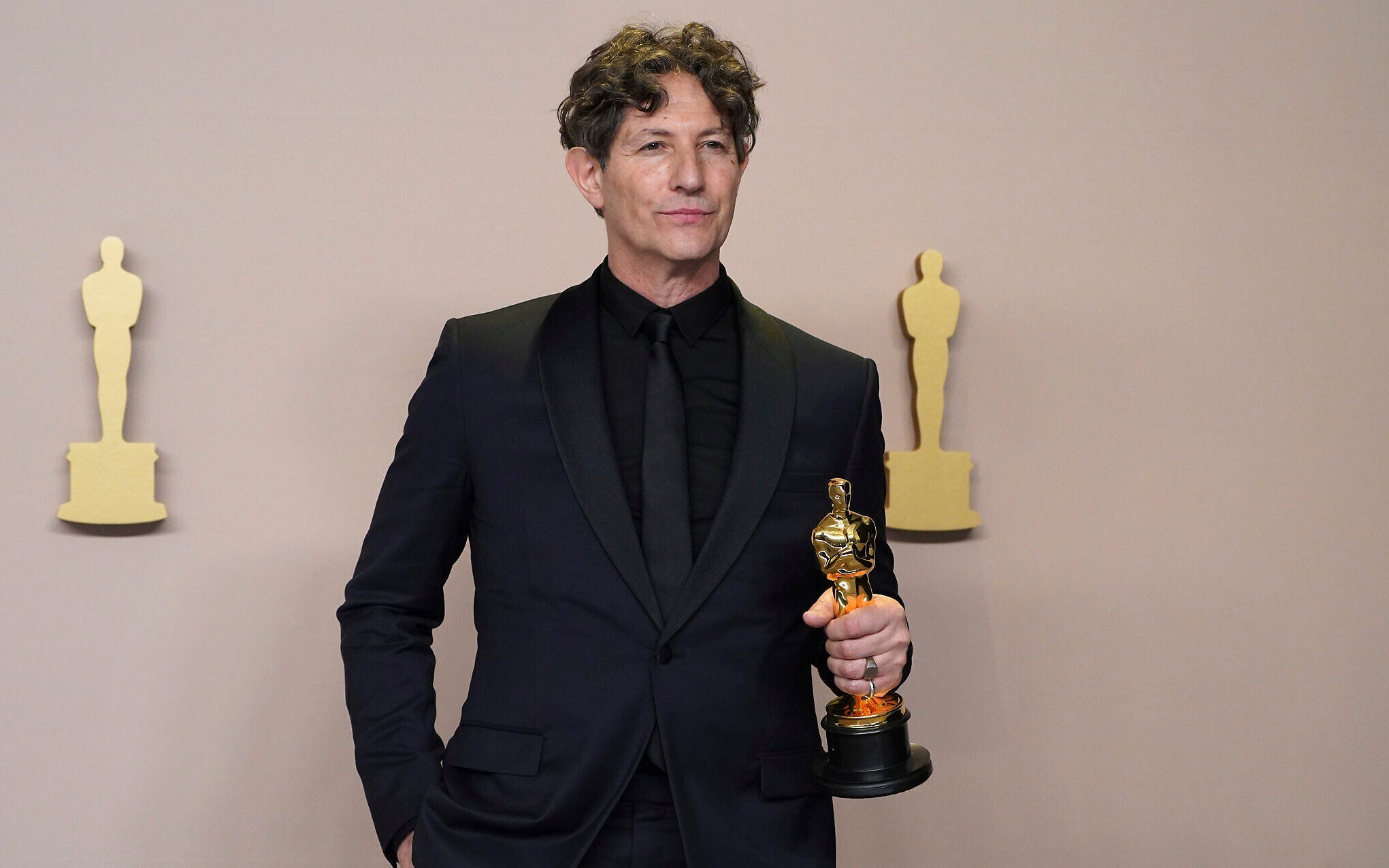
We need to talk about us. The people. Society. And what have we done? I tend not to talk about celebrities in the times of the biggest humanitarian crises of our time unfolding on our phones, but last week, with the Oscars, the celebrity culture intertwined with the military industrial complex, better yet, danced with it, so here we are.
Yesterday, Variety magazine published an open letter, signed by over 450 Jewish creatives and professionals, denouncing Jonathan Glazer’s ‘Zone of Interest’ Oscars Speech, in which he “refuted (his and his producing partners) Jewishness and the Holocaust being hijacked by an occupation which has led to conflict for so many innocent people.”
Denouncing the refute? Is this real life? More on this below.
All human catastrophe, and especially the ones of this magnitude we are currently witnessing in Gaza, lifts the masks. From the government and the people in power, celebrities you admire, your friends, family, and followers on social media. There’s nothing anyone can say anymore, confronted with what they have done during this time.
There’s hope here, folks. For every individual who callously ignores or even endorses violence against a starving, defenseless population under siege, there comes another, seemingly out of thin air, who restores your faith in humanity.
I know what you’re thinking; it’s hard to imagine what could be hopeful amidst images and videos of children being blown to pieces, but it’s precisely in these moments that we find our collective clarity. We think we can orchestrate our growth with good jobs, relationships, opportunities, and positive mindsets; in reality, actual, real growth happens during human catastrophes.
There’s nothing poetic or meaningful about mass death; its significance lies solely in its reflection of society. Since October, faced with the greatest horror of our time, how have we fared? The society that often ponders, "If we had lived through the Holocaust, surely we would have taken action," we now confront our own response.
And how did people with huge platforms respond? Successful, famous people, followed by millions? Their apparent concern seems to vanish when faced with the “complexity” of the present crisis, revealing a superficiality that prioritizes image over genuine care. “Hollywood is more of a PEP squad: progressive except for Palestine,” as Dave Zirin hauntingly called them out in his piece for The Nation.
“Palestine is a litmus test,” we heard early last October, but we had no idea the unraveling would be so painful to watch. People you loved to see on screen praying for Israel on their Instagrams alongside an image of a leveled Gaza Strip or deleting an image of children in Gaza looking at the skies in horror upon learning those aren’t Israeli kids but Palestinian ones. Heart-wrenching captions alongside a visually striking image of the wrong kids whose imminent fate doesn’t deserve your public sympathy, let alone action.
Dystopia struck abruptly, realizing people you admired are, at best, selective in their humanitarian efforts, while others are merely performative, catering to Instagram likes. Mind you, these are the very Hollywood liberals who once recoiled at MAGA in disbelief. Yet now, they find themselves entangled in the same “frenzy of bloodlust, dehumanizing rhetoric, and willful ignorance of facts that they vehemently denounced in the MAGA movement,” as Fredrick Joseph phrased it.
You may ask yourself why I am particularly hard on celebrities, while so many people aren’t speaking out. Because they have a DUTY, as human beings with large platforms and the adoration of many, to USE that privilege in pressuring governments to stop mass death. Because they have been telling us for years they care about human life, suffering, human rights, and climate issues—to expand their public profiles—and now have a RESPONSIBILITY to act on decades of their empty talk. Because they smirk at the far-right for supporting Trump, a leader who cares little about laws, empathy, and humanity, yet they support the government of Benjamin Netanyahu, choosing to believe fairytales about the most sophisticated army on earth slaughtering 30,000+ civilians in “self-defense.”
Again, Fredrick Joseph wraps it up with a perfect bow:
“This introspection leads to an uncomfortable truth about these liberals: the liberalism they profess is a privilege, a garment worn with exclusivity, extended only to those deemed worthy of humanity. It is a selective liberalism, conditional and bounded, a travesty of the very ideals it purports to uphold.
In this light, the struggle for Palestinian liberation becomes not just a fight against an external oppressor but also a battle against an internal contradiction, a hypocrisy within the ranks of those who claim to stand for justice and equality. This is the dilemma at the heart of the matter — the reckoning with a liberalism that is, for some, only skin deep.”
Where is the hope I mentioned above, the hope I’m trying to sell you here? Well, hope is in the compass;
You are free.
We are free from these people.
I feel free. I’m no longer disappointed in famous and/or successful people who don’t use their large platform to speak out on mass murder; I’m free of holding myself to their standards of jobs, success, and lifestyle. I no longer see their houses, projects, or large checks as something I’m striving for or longing for. I don’t see their vacation images on yachts in the middle of winter and sigh; instead, I pity their ambivalence. They are ridiculous to me. I pity the lack of their moral compass, I pity their panic about losing opportunities. These people aren’t free.
You and I—we are free.
You still don’t see it?
